

Call us Now!
(833) 819-5010
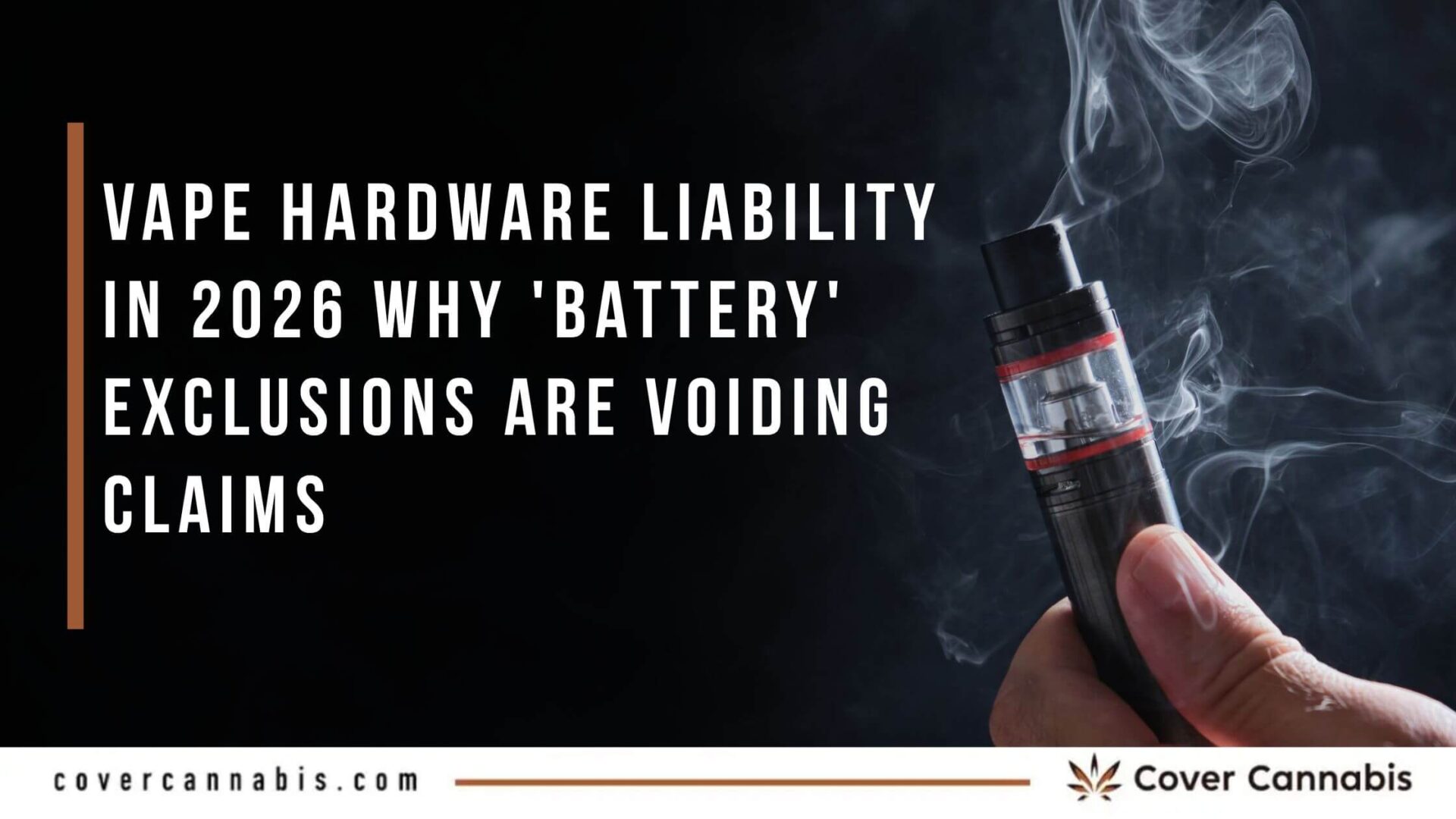
As summer temperatures rise, cannabis operators face a unique set of environmental and property risks. While most facility managers focus on HVAC systems and warehouse cooling, there is a hidden danger sitting on dispensary shelves and in consumer pockets. The booming market for proprietary vape pod systems and disposable vape pens has flooded the industry with lithium-ion batteries. When exposed to summer heat, these popular devices become significant liability risks.
Lithium-ion batteries are notoriously sensitive to extreme temperatures. A disposable vape left on the dashboard of a hot car or a shipment of proprietary pods sitting on a sun-baked loading dock can quickly undergo a chemical process called thermal runaway. This reaction causes the battery to rapidly overheat, leading to severe leaks, uncontrollable fires, or sudden explosions.
These hardware failures can result in devastating property damage and severe personal injury. When a device fails, the cannabis manufacturer, distributor, and retailer can all find themselves squarely in the crosshairs of a costly product liability lawsuit.
Because of the increased frequency of vape-related hardware failures and the high costs of litigation, many insurance carriers have quietly updated their underwriting guidelines for 2026. To minimize their own risk, insurers are heavily relying on “Battery Exclusions” or “Electronic Component Exclusions” within Product Liability policies.
When a consumer files a lawsuit for a vape explosion or property fire, the cannabis brand naturally turns to their product liability insurance. However, if the policy contains a battery exclusion, the carrier can completely deny the claim. The insurer will argue that the damage was caused by the hardware component rather than the cannabis oil itself. This dangerous gap leaves the cannabis brand fully responsible for the legal defense costs and any subsequent settlements out of pocket.
Do not assume your standard product liability policy covers hardware failures. As you review your 2026 renewal paperwork, you must actively hunt for these exclusions. Here is exactly what to look for in your policy documents:
Scan your declaration pages and endorsements for terms like “Lithium-Ion,” “Electronic Components,” “Hardware,” or “Power Source.” Exclusions often hide under these technical definitions.
Ensure that your policy’s definition of your product explicitly includes the hardware, cartridges, and batteries, rather than just the cannabis extract or flower.
Some policies contain clauses that void coverage if the hardware was manufactured by an overseas third party. Since the vast majority of vape hardware is imported, this clause can effectively erase your coverage the moment a claim is filed.
The legal and financial fallout from a single exploding vape device can be catastrophic for an unprepared business. It is critical to work with an insurance broker who specializes in the cannabis industry and understands the deep nuances of hardware liability.
Disclaimer: Please note that this article is intended for educational purposes only and does not constitute legal or financial advice. Coverage is always subject to the specific terms, conditions, and exclusions of your individual policy. Laws and regulations vary by jurisdiction.
Reach out to the team at Cover Cannabis today to review your current product liability policy and ensure your hardware is properly protected before the summer heat arrives.